
AI as a Double-Edged Sword: CID President Advocates for Inclusive Tech Governance at GDC ARF 2026
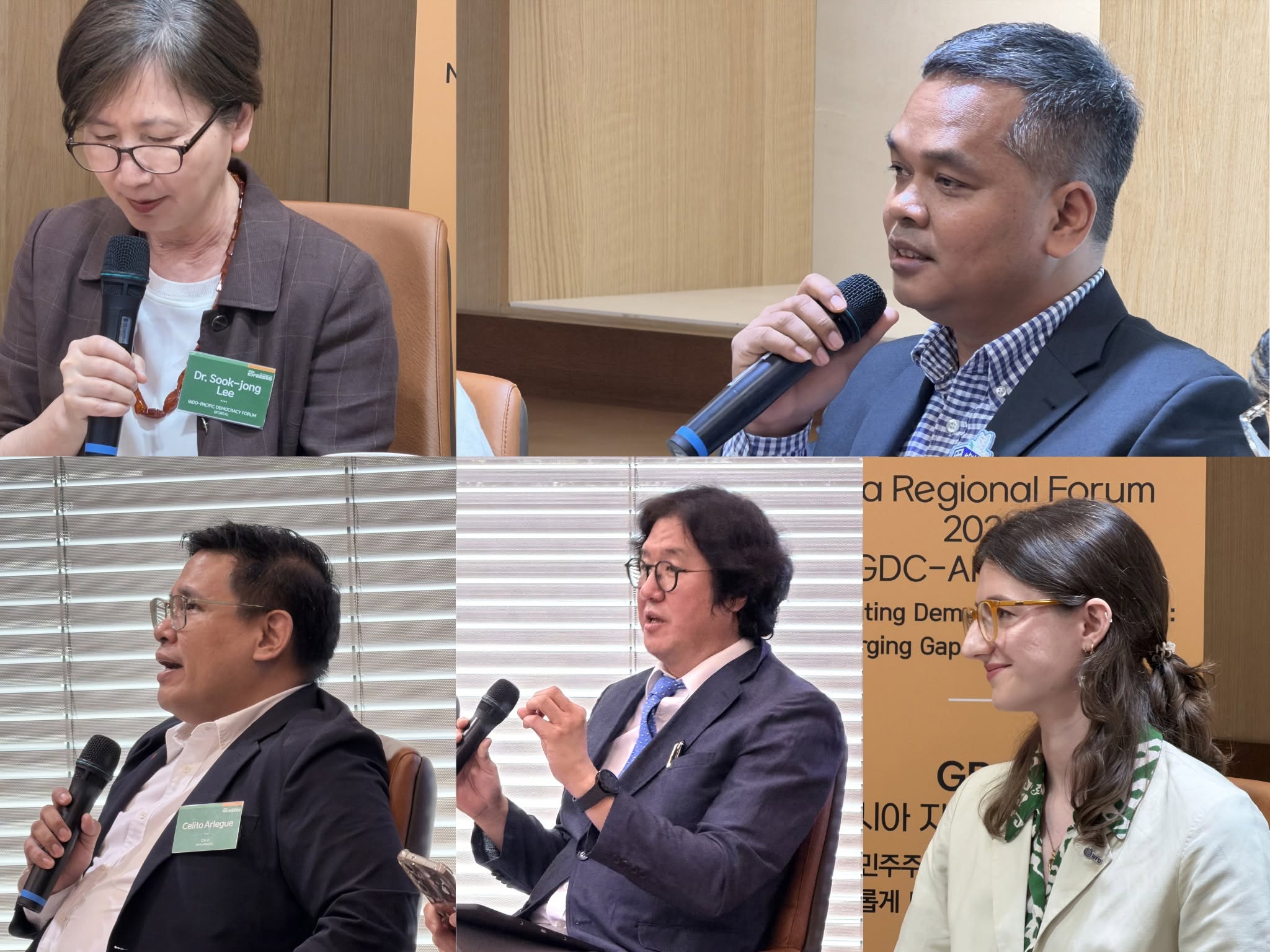
From June 10-11, 2026, Chanroeun Pa, President of the Cambodian Institute for Democracy (CID), participated in the Global Democracy Coalition Asia Regional Forum 2026 (GDC ARF 2026) in Seoul, South Korea. This year’s forum, themed “Navigating Democratic Transitions: Emerging Gaps & Opportunities,” brought together members of the GDC Asia network and other democracy promoters. It was co-organized by Asia Centre, the Korea Democracy Foundation (KDF), and the Indo-Pacific Democracy Forum (IPDF) at the National Museum of Korean Democracy.

On June 11, 2026, Mr. Pa joined a high-level panel discussion on “Navigating Democratic Transitions in the Age of AI.” He shared the stage with an esteemed panel of regional leaders and experts:
– Mr. Celito Arlegue, Executive Director, Council of Asian Liberals and Democrats (CALD)
– Dr. Sunghack Lim, Professor, University of Seoul and Member of the International Panel on Delta Democratic Framework (IPDF)
– Ms. Hannah Bowley, Senior Programme Manager, Asia Pacific, Westminster Foundation for Democracy (WFD)
The high-level session was moderated by Dr. Sook Jong Lee (Co-founder, Asia Democracy Research Network and Senior Fellow, East Asia Institute). The panel addressed the complex impact of artificial intelligence (AI) on democratic institutions. While acknowledging the severe risks that AI poses to information ecosystems, the panellists emphasised the profound opportunities it offers to strengthen democracy, including:
– Augmented Deliberation: Leveraging AI to facilitate broader, more inclusive public discourse.
– Administrative Transparency: Deploying automation to enhance governmental accountability and open data.
– Secure Activism: Utilizing advanced, encrypted communication tools to protect civil society actors.
During the discussion, Mr. Pa argued that Artificial Intelligence is a double-edged sword, presenting transformative opportunities alongside severe challenges for daily life and democratic processes. The critical determinant of its impact, he stressed, is how AI is governed and who oversees its evolution. He strongly advocated for inclusive, multi-stakeholder AI governance, emphasizing that the future of technology cannot be left solely to private corporations and government. He highlighted the necessity of actively integrating the voices of civil society and the general public into AI oversight to ensure ethical deployment and safeguard human rights. As an example, he cited a case from Cambodia where a working group of twenty non-governmental organizations (NGOs) effectively collaborated and advocated to the Cambodian government, securing mandatory civil society input and consultation in the drafting of the country’s cyber-related laws and national AI strategy. Finally, he emphasized the urgent need for digital and AI literacy so that the public can navigate and use these technologies both effectively and responsibly.

The forum concluded with a shared consensus that inclusive governance models are essential to ensuring AI is a tool for democratic empowerment rather than digital authoritarianism.
*Photos are credited to Asia Centre