
Learning from South Korea’s Democratic Journey: Lessons and Perspectives for Cambodia
By Chanroeun Pa, President of Cambodian Institute for Democracy
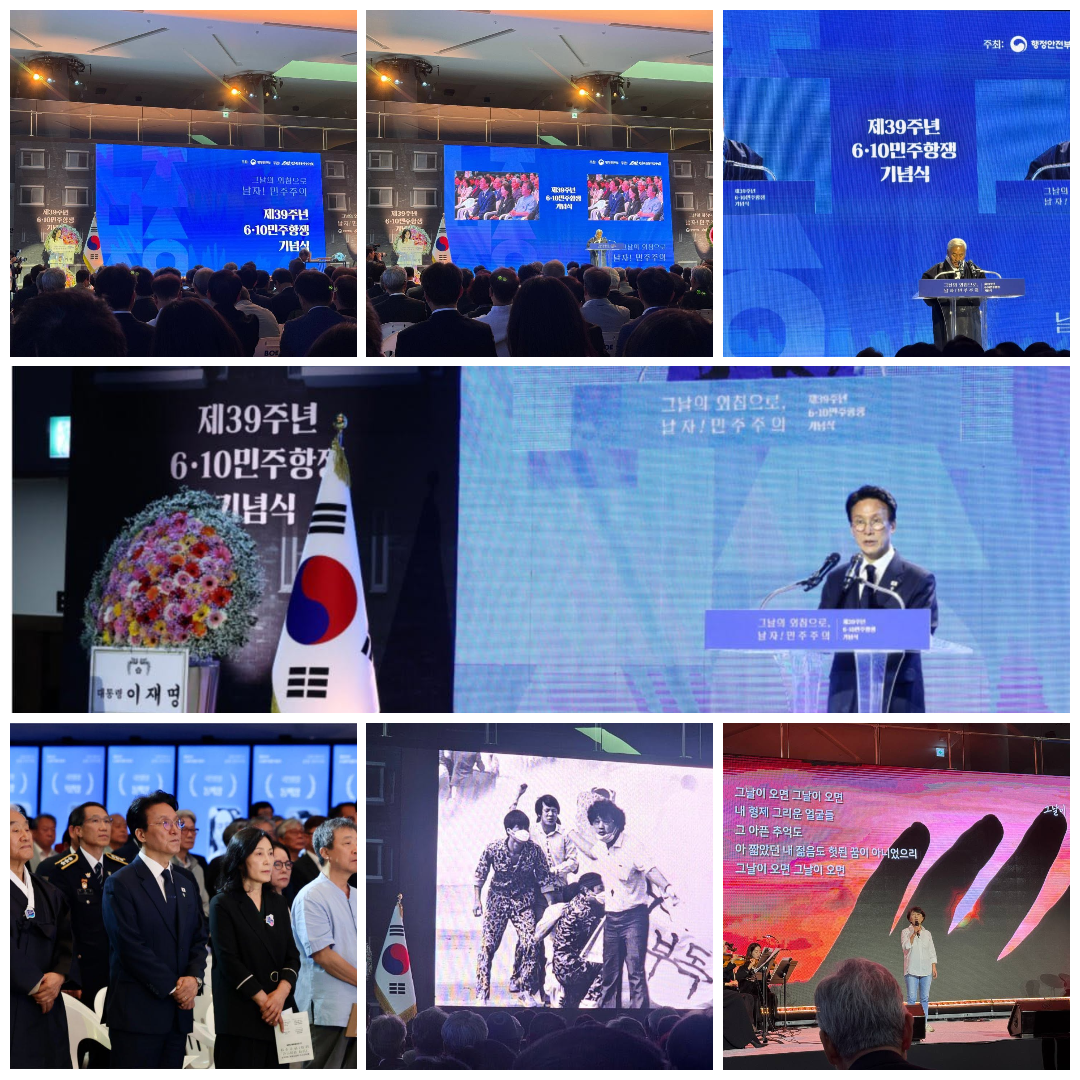
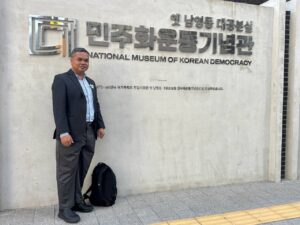
On June 10, 2026, in my capacity as President of the Cambodian Institute for Democracy (CID), I had the distinct honor of being invited as an esteemed guest by the Korea Democracy Foundation to attend the commemoration of the 39th Anniversary of the 1987 Democratisation Movement in South Korea. The grand event was held at the Korea Democracy Museum and was attended by South Korean Prime Minister Kim Minseok, senior government officials, and distinguished national and international dignitaries from various countries in the region.
Reflecting on my participation and tour of the historical exhibitions at the museum, I would like to share the following key observations and insights:
1) Embedding Democratic Values into the Core of Public Administration: The Korea Democracy Foundation operates as a public institution under the direct oversight of South Korea’s Ministry of the Interior and Safety. This clearly demonstrates that the South Korean government deeply values and integrates human rights principles and democratic ideals into the bedrock of its national governance. This shared spirit has given rise to their meaningful and enduring slogan: “Living by the Democratic Way.”
2) Political Freedom as an Economic Catalyst: The history of the South Korean people’s struggle for liberty spans a long journey from the 1960s, culminating in a fully realized liberal democratic system in 1987. The achievements following the 1987 Democratization Movement demonstrate that political freedom serves as a powerful catalyst for economic growth. It effectively transformed South Korea into a high-wage economy, accelerated financial liberalization, and fostered a highly prosperous society.
3) Institutionalizing Civic Education: The establishment of the Korea Democracy Foundation and the Korea Democracy Museum reflects the political maturity and openness of both the South Korean government and its society in acknowledging and learning from their citizens’ bitter historical struggles for freedom. These institutions do not merely serve as a mirror reflecting the past or as a reminder of democratic values; they also stand as an invaluable “civic education resource” to cultivate a deep understanding of rights, freedoms, and civic responsibilities among future generations.
4) Hopes and Visions for Cambodia: Drawing from this invaluable experience, I hold two steadfast hopes and aspirations for our homeland:
– Upholding the Rule of Law: I hope that Cambodia will continue to strengthen its adherence to the path of a pluralistic liberal democracy, as clearly and effectively enshrined in the Constitution—the supreme law of the nation.
– A Cambodian Museum of Democracy: I envision a day when Cambodia establishes its own “Democracy Museum” to document, preserve, and showcase the country’s democratic journey, serving as an educational legacy and source of awareness for generations to come.
Democracy does not happen overnight; it is an ongoing process of evolution. It is neither easily achieved nor self-sustaining. It demands continuous commitment, active participation in its construction, collective guardianship, and lifelong civic learning from all of us to truly thrive.
*I would like to express my deepest gratitude to the Korea Democracy Foundation, Asia Centre, Global Democracy Coalition and all partner organizations for their generous support and for providing me with this profound opportunity to participate in this historic program.